

As winter approaches and another year comes to a close, Virginia homeowners begin shifting into preparation mode—securing their homes, assessing potential risks, and making sure their properties are ready for colder weather, holiday activity, and unpredictable seasonal storms. At Flood Expert, we’ve seen firsthand how taking a proactive approach to property care can prevent thousands of dollars in damage and dramatically reduce the stress homeowners face during the winter months.
Taking a proactive approach to property care, as detailed by our restoration company in Northern VA, can help prevent damage and stress.
Serving Lorton, Tysons, Fairfax, Vienna, and the Washington D.C. area, our restoration team steps in when disasters strike—whether it’s a burst pipe, basement flood, electrical fire, or storm damage. But our mission goes beyond repairs. We aim to educate homeowners so they can protect their properties before emergencies happen.
This guide shares the best end-of-year restoration tips for Virginia homeowners, based on years of on-site experience, insurance claims support, and real restoration case studies. Whether you’re preparing for freezing temperatures, heavy rain, holiday gatherings, or simply closing out the year safely, these insights will help you strengthen your home and avoid costly disasters.
Why End-of-Year Preparation Matters in Virginia
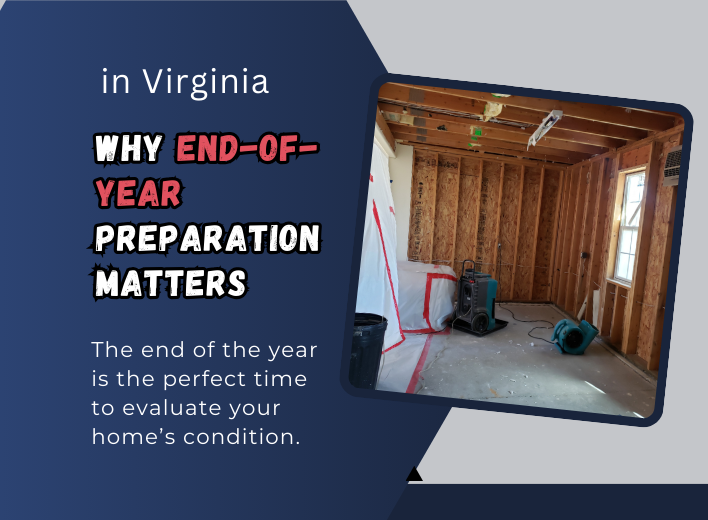
The end of the year is the perfect time to evaluate your home’s condition. In our region—Northern Virginia and the D.C. metro area—weather patterns can be unpredictable. One week may bring freezing temperatures; the next may deliver heavy rain, melting snow, or strong winds.
This combination increases the risk of:
- Frozen or burst pipes
- Roof leaks
- Basement flooding due to saturated soil
- Fire hazards from heating systems and holiday decorations
- Mold growth in poorly ventilated or humid areas
- Structural damage from storms and temperature shifts
That’s why we created this comprehensive guide—to help homeowners take the small steps now that prevent big disasters later.
1. Inspect and Protect Your Plumbing Before Freezing Temperatures Hit

Water damage is one of the top winter restoration issues in Virginia. As temperatures drop, the pressure inside frozen pipes increases, making them susceptible to cracking or bursting.
In Fairfax homes, some common causes of water damage include frozen pipes, which homeowners should check regularly.
Where to Start
Flood Expert recommends checking:
- Outdoor hoses and spigots
- Exposed pipes in basements, attics, and crawl spaces
- Kitchen and bathroom pipes on exterior walls
- Washer and dishwasher supply lines
- Water heater and main shut-off valve
Even a small crack can release hundreds of gallons of water in minutes.
Practical End-of-Year Plumbing Tips
✔ Insulate exposed pipes
Using foam wrap or insulation sleeves can significantly reduce your risk.
✔ Disconnect outdoor hoses
Leftover water freezes and expands—backing into the plumbing system.
✔ Seal gaps and drafts
Cold air entering through small wall openings can freeze pipes from the outside in.
✔ Know where your shut-off valve is
In an emergency, shutting off water quickly reduces property damage by up to 80%.
✔ Consider a smart leak detection system
These devices alert you instantly if water flow becomes abnormal.
2. Prepare Your Home for Holiday Fire Risks
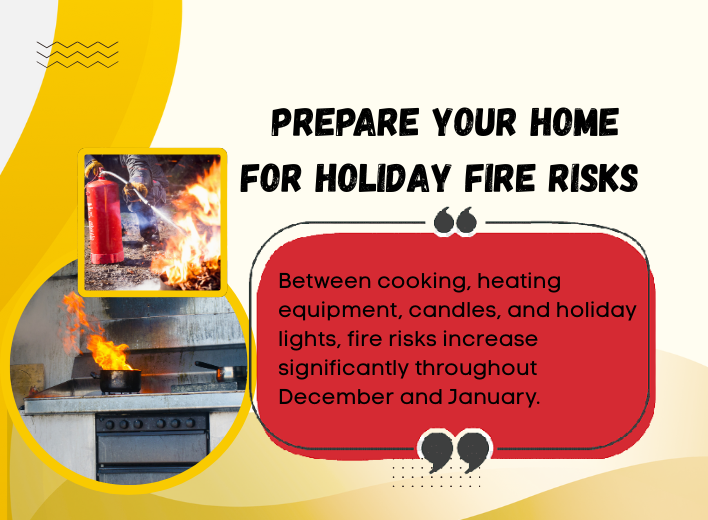
Between cooking, heating equipment, candles, and holiday lights, fire risks increase significantly throughout December and January.
If a fire does occur, remember that you can restore your home after fire damage with professional help.
Homeowners can contact us anytime because we choose to support them when they need us to start the reliable water or flood restoration process.
Key Fire Safety Tips for the End of the Year (H3)
✔ Inspect Your Heating System
Whether you use a furnace, heat pump, wood stove, or fireplace:
- Replace filters
- Clean the chimney
- Check for unusual smells
- Remove flammable items nearby
Faulty heating units are one of the top causes of winter house fires in Virginia.
✔ Test Smoke and Carbon Monoxide Detectors
Devices should be tested monthly and replaced every 8–10 years.
✔ Use Indoor and Outdoor Lights Safely
Avoid:
- Older incandescent light strings
- Overloaded outlets
- Loose or frayed wiring
- Running cords under rugs
✔ Keep the Kitchen Disaster-Free
Cooking-related fires spike during holidays. Never leave food unattended.
3. Reduce the Risk of Basement Flooding During Winter Rains
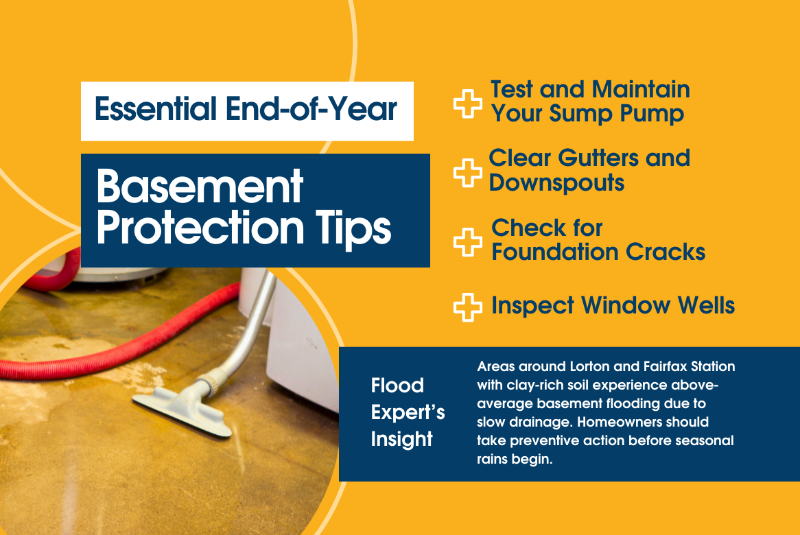
While snowstorms get most of the attention, winter rainstorms are the real flooding threat for homeowners in Northern Virginia.
Essential End-of-Year Basement Protection Tips
✔ Test and Maintain Your Sump Pump
Flood Expert recommends:
- Running a test cycle
- Checking the backup battery
- Clearing debris from the pit
- Installing a secondary pump if your area is flood-prone
A failed sump pump is one of the most common causes of basement water damage.
✔ Clear Gutters and Downspouts
Clogged gutters redirect water toward your home’s foundation.
✔ Check for Foundation Cracks
Even small cracks can allow groundwater to enter during heavy rainfall.
✔ Inspect Window Wells
Ensure proper drainage and consider clear covers if needed.
4. Prevent Mold Growth Before It Begins
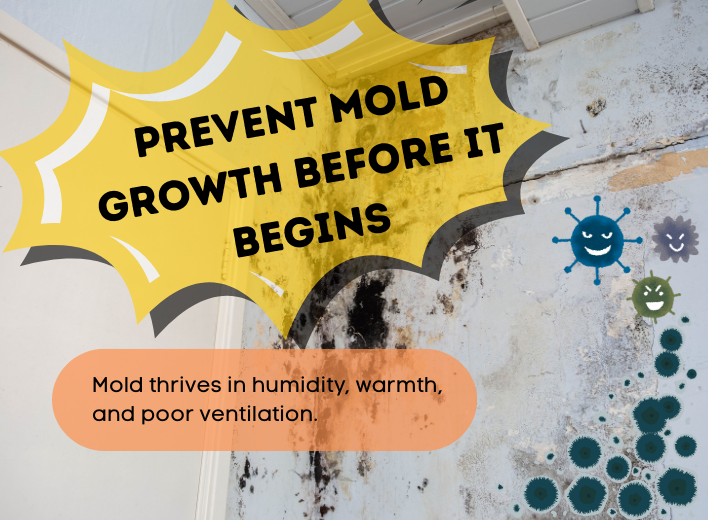
Mold thrives in humidity, warmth, and poor ventilation. During winter, the temperature differences between indoor heat and outdoor cold can create condensation—especially in basements, attics, bathrooms, and walls.
End-of-Year Mold Prevention Checklist
✔ Run a dehumidifier in key areas
Especially in unfinished or semi-finished basements.
✔ Improve ventilation
Use exhaust fans in bathrooms, kitchens, and laundry rooms.
✔ Fix minor leaks immediately
Even a small drip can encourage major mold growth within 24–48 hours.
✔ Clean behind appliances
Moisture often accumulates unnoticed behind refrigerators and washers.
✔ Keep gutters clear
Overflowing gutters can send water running down exterior walls, creating hidden moisture issues.
5. Protect Your Roof Before Snow or Windstorms Arrive

Roof problems tend to worsen quickly in winter, especially when ice and snow accumulate.
After a storm, addressing roof repairs after storm damage should be a top priority to prevent further issues.
Flood Expert’s Roof Safety Recommendations
✔ Inspect shingles for lifting, shifting, or cracking
These weak points let water seep inside.
✔ Clean debris from the roof surface
Leaves and branches trap moisture and increase the risk of ice dams.
✔ Check attic insulation
This reduces heat loss and prevents snow from melting unevenly on the roof.
✔ Verify that flashing around chimneys and vents is sealed
Most roof leaks originate from these areas.
✔ Trim overhanging branches
Branches break more easily during winter storms and can damage roofing materials.
6. Prepare Outdoor Areas to Avoid Water Intrusion
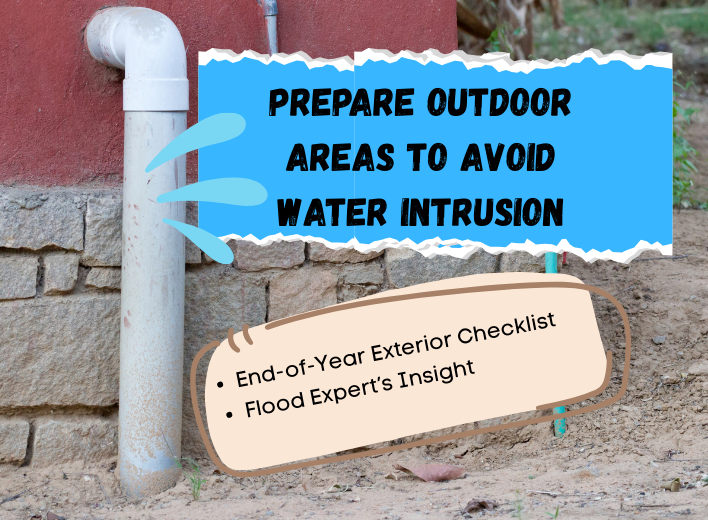
Outdoor maintenance plays a huge role in preventing winter water damage.
End-of-Year Exterior Checklist
✔ Clear yard drains and storm drains
Flooding often starts with clogged exterior drainage.
✔ Inspect siding and exterior caulking
Cracked siding or gaps allow water to enter and freeze within walls.
✔ Store outdoor furniture and equipment
Snow and rain can cause rusting or create physical hazards.
✔ Ensure proper soil grading
Soil should slope away from the home’s foundation.
7. Inventory Your Home for Insurance Protection
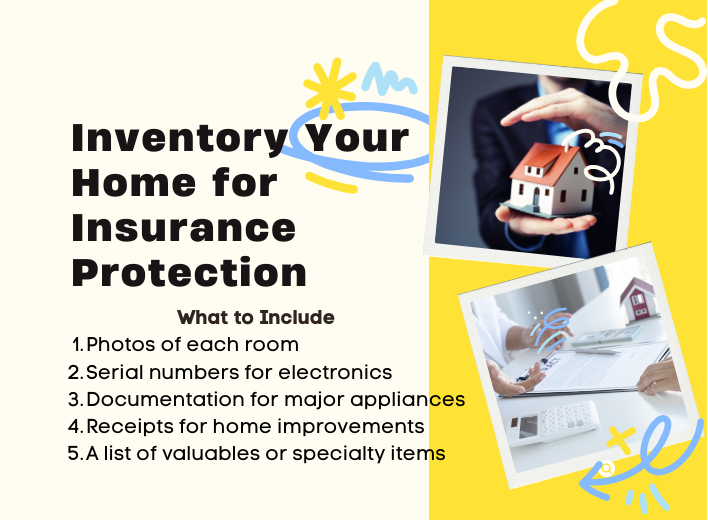
End-of-year is the perfect time to update your home inventory—something that makes the restoration process dramatically smoother in the event of a disaster.
What to Include
- Photos of each room
- Serial numbers for electronics
- Documentation for major appliances
- Receipts for home improvements
- A list of valuables or specialty items
Why It Matters
Insurance adjusters rely heavily on homeowner documentation. A well-prepared inventory accelerates claims and ensures fair coverage.
8. Schedule a Professional End-of-Year Home Inspection
DIY care is important—but professional assessments uncover hidden issues the average homeowner cannot detect.
At Flood Expert, we offer:
- Moisture testing
- Infrared inspection for hidden leaks
- Plumbing system evaluations
- Mold risk assessments
- Sump pump testing
- Exterior vulnerability checks
- Fire and electrical hazard evaluation
A quick annual checkup can prevent costly emergencies.
9. What to Do If a Winter Emergency Happens

Despite preparation, disasters still happen. Flood Expert is equipped to respond 24/7 to:
- Burst pipes
- Flooding
- Roof leaks
- Fire damage
- Smoke damage
- Mold infestations
- Storm-related structural damage
Our Process
- Immediate Response – We arrive quickly and assess the situation.
- Damage Mitigation – We prevent the problem from worsening.
- Moisture and Contaminant Removal – Ensuring your home is safe.
- Restoration and Repairs – Returning your property to pre-loss condition.
- Insurance Assistance – We work with your carrier to simplify the claims process.
Conclusion: Start the New Year with a Safer, Stronger Home
End-of-year home preparation is more than a seasonal task—it’s an investment in safety, peace of mind, and long-term property value. Whether you’re focusing on preventing pipe bursts, avoiding winter floods, reducing fire risks, or keeping mold away, every step you take helps protect your home and loved ones.
At Flood Expert, we’re proud to support homeowners throughout Northern Virginia and the D.C. metro area. From restoration services to home safety assessments, our team is here to help you close out the year with confidence and enter 2026 with a stronger, safer home.
If you need help preparing your home or dealing with a recent incident, call Flood Expert to speak with a specialist. We’re here when you need us—day or night—ready to restore your home and your peace of mind.